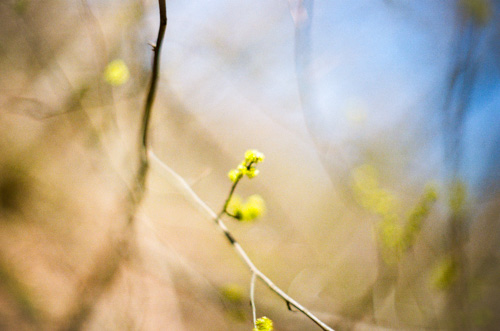
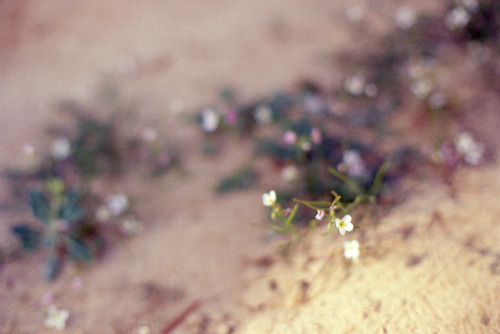
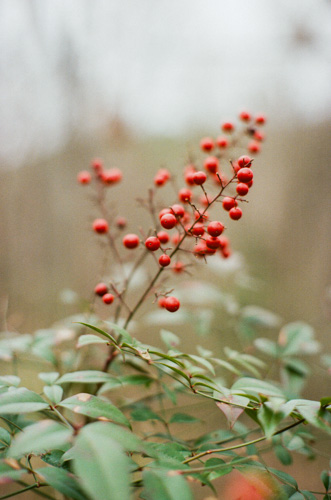
At f/1.2 the world turns to butter and mostly everything falls out of focus. There is little sharpness to be found in what's in focus, but that's a challenge in itself — even breathing in and out can move the camera minimally, shifting your focus plane.
Bokeh on small branches can feel a little bit like double vision, extra dizzy in a forest. Somewhat less contrast at this aperture but I wouldn't describe it as bad by any means.
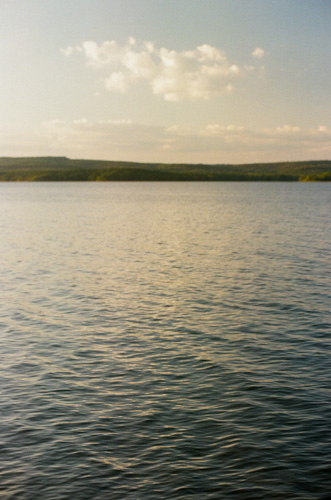
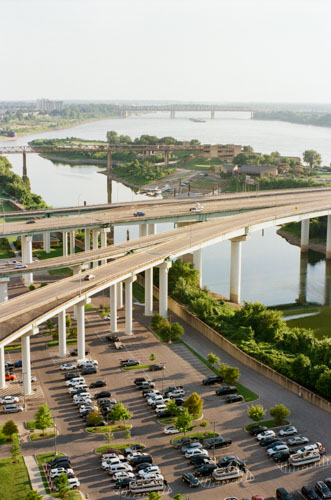
Wide open at f/1.2 it allows you to be a little crazy and experimental. At f/2.8 it's reliably able to pull a focal point out from the sea of bokeh. f/4–5.6 allow a bit more depth while still taking the background out of focus in a still recognisable manner. f/8 is crisp everywhere. It forces you to be deliberate with your composition and selective with your focusing.
My love with this lens is that it has mutiple characters all baked into one; f8 for dependable clarity, f/4 for a natural portrait look, f/2.8 for those macro details, and f1.2 for some arty fun.
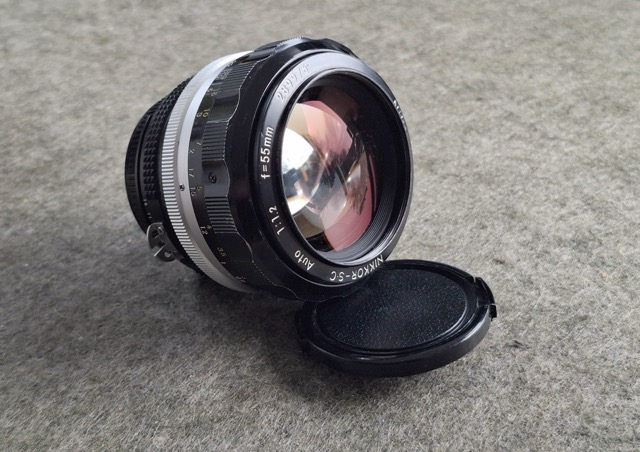
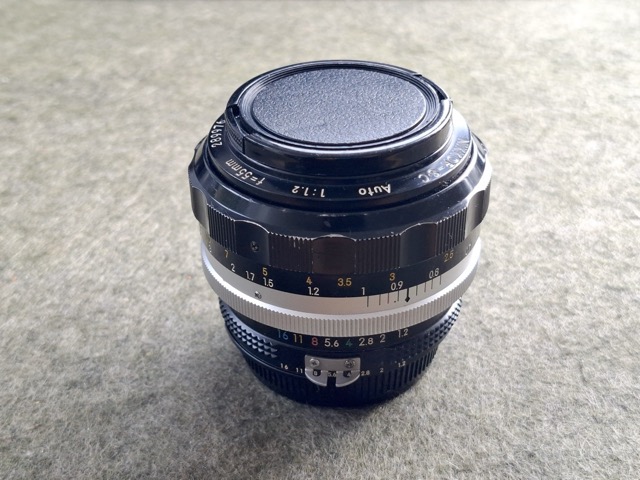
Serial: 289976 · Nikon F-mount AIS · 55mm
NIKKOR S.C 55mm f/1.2
Living on my F3 since 2024
◆
Beautiful metal construction that's solid in the hands. No jiggles. The aperture ring is clicky and snaps from one value to the next. A scalloped focusing ring that has both smooth dips for your fingers to fall into and raised ridges for grip. The focusing is soft and smooth, but has enough resistance to not slip when the camera is being moved about. The focus throw is actually rather long — it takes two twists with your hands to move from closest focusing distance to infinity.
Very enjoyable image characteristics. Want to get experimental? Knock it all the way open at f/1.2 and make some fever-dream like images.
★★★★★

Bokeh
Specifications
I've found it hard to pinpoint the age of my copy, I believe mine is the from the production run in 1973, however it has a very convincing looking AIS ring on the rear, and lacks the scalloped aperture ring of similar models that year. Perhaps it has been frankensteined by someone who clearly knew what they were doing as it looks convincingly original to my eyes.
My purchase came with the metal HS-3 hood which looks extra cool when attached - but will easily be knocked off if brining it in and out of a bag, so best used when carried in my opinion.
My purchase came with the metal HS-3 hood which looks extra cool when attached - but will easily be knocked off if brining it in and out of a bag, so best used when carried in my opinion.
| Focal length | 55mm |
| Max aperture | f/1.2 |
| Min aperture | f/16 |
| Filter thread | 52mm |
| Elements | 7 elements / 5 groups |
| Coating | S.C (Super Coated) |
| Mount | Nikon F |
| Min focus | 0.6m |
Character
The focusing has a weight to it that I could describe as heavy, but not heavy like there's a grinding resistance — more like the feeling of wading through water. It's there, it slows you down a little, but the feedback feels kinda nice. It's the same characteristic that gives you greater control with focus at narrow depths of field.
At 55mm it feels closest to what my eyes see, so every photograph feels like a frame from a scene that is in front of me. There's layers and a closeness that I find 55mm compresses the image to recreate.
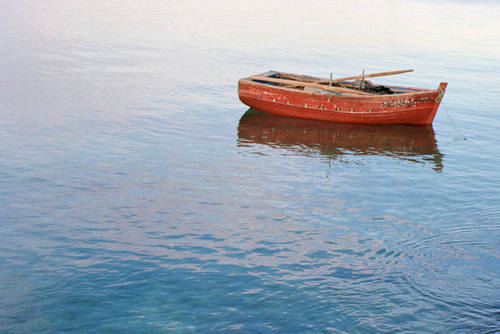
The contrast is excellent. The colours come out rich — not vibrant, not saturated, but rich. There's a depth to them without being over the top.
One to watch: the lens caps can come loose rather easily, which has led to two small damaged patches on the coating of my lens. Worth keeping an eye on.
At 55mm it feels closest to what my eyes see, so every photograph feels like a frame from a scene that is in front of me. There's layers and a closeness that I find 55mm compresses the image to recreate.
The contrast is excellent. The colours come out rich — not vibrant, not saturated, but rich. There's a depth to them without being over the top.
One to watch: the lens caps can come loose rather easily, which has led to two small damaged patches on the coating of my lens. Worth keeping an eye on.