An somewhat exhaustive list of the cameras I've used and owned over the years, along with my thoughts on each. This isn't a wiki article so you'll find subjective opinions and potentially incorrect facts but I've done my best to make it accurate.
To be added: Nikon F55, Olympus AF1, Nikon Litetouch Zoom 120, Olympus Trip35, Yashica 44 TLR,
Serial: 1810888 · 35mm SLR
Nikon F3 HP Dropped, dented, and still kicking.
My go-to 95% of the time
◆
This camera can do 100% of what I want and more than what I need. Compared to modern technology you could describe it as basic, but for my use it's perfectly functional without excess. Simple, durable, low maintenance — features you should want in my opinion.
Owned since 2016 · 200–300(?) rolls shot
★★★★★
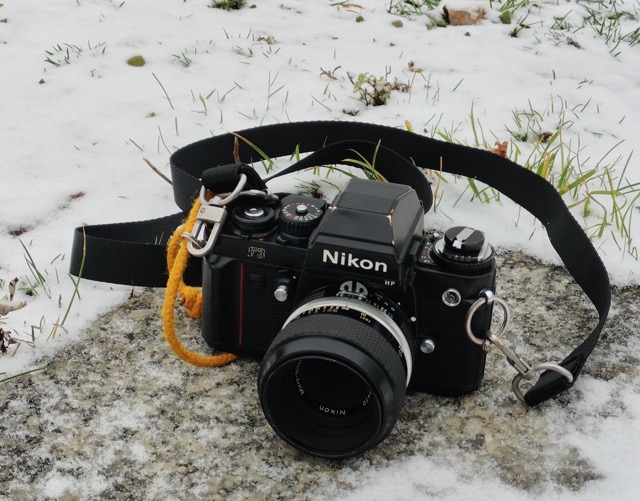
Nikon F3 in the snow on a cold Berlin winter day. Homemade wrist strap included.
Nikon F3 in Portugal. Possibly with Kodak Pro Image 100
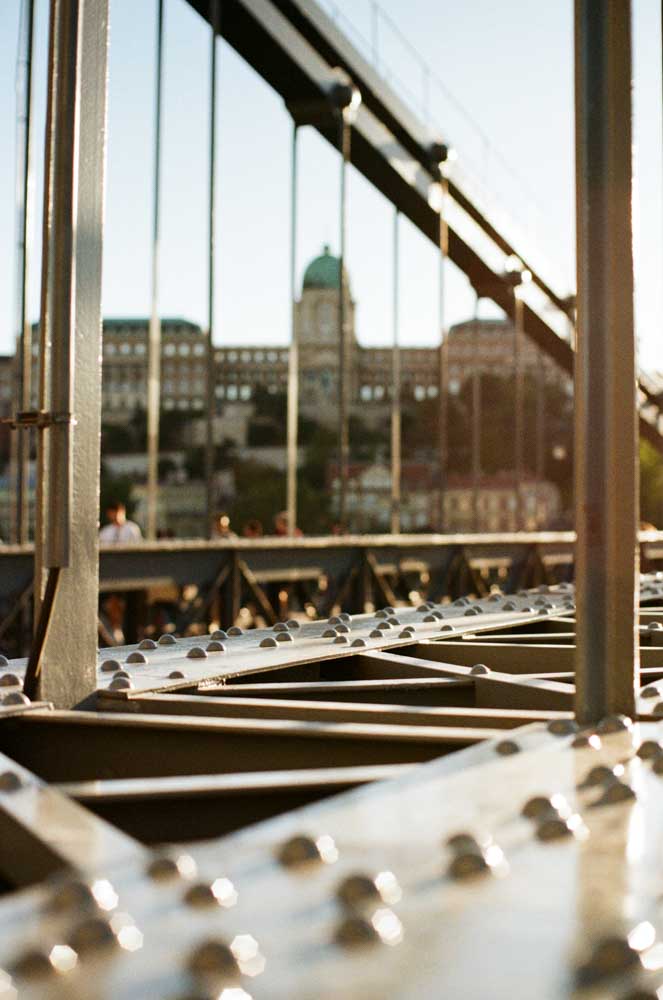
Example from Nikon E Series 75-150mm. Probably at 150mm f/5.6. Budapest.
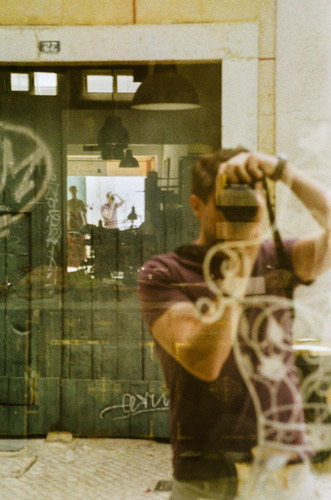
Self portrait in Djibouti, with NIKKOR S.C 55mm and timer function.
Close up and bokeh from Micro Nikkor P.C 55mm. Probably at f/3.5.
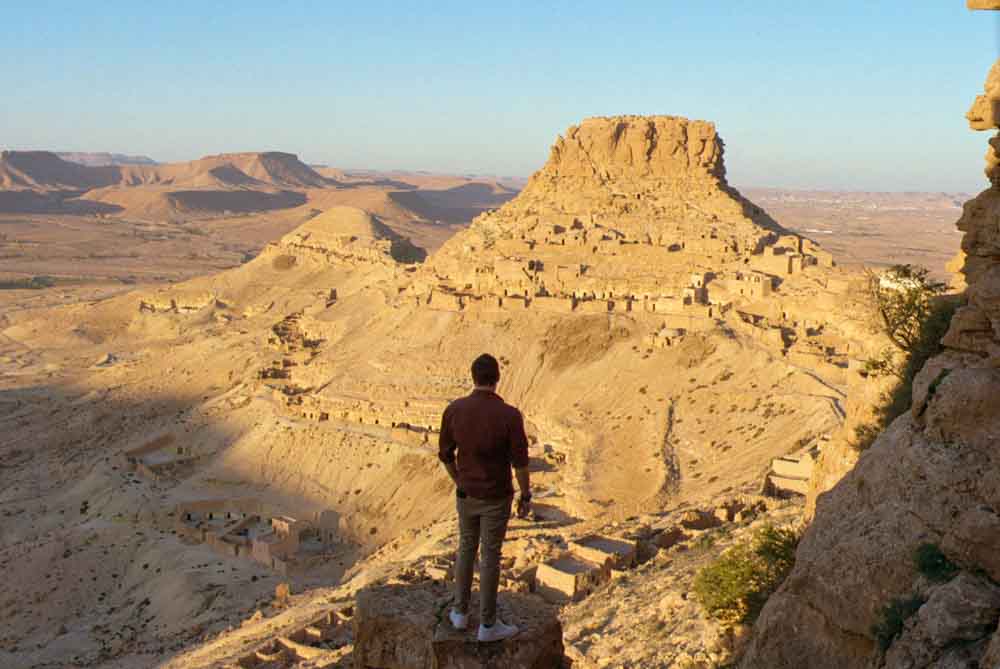
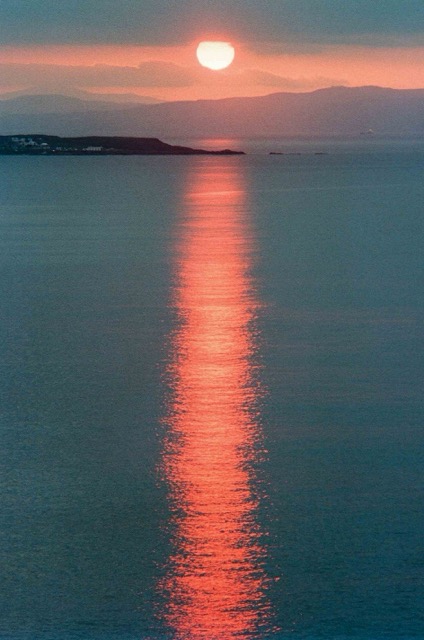
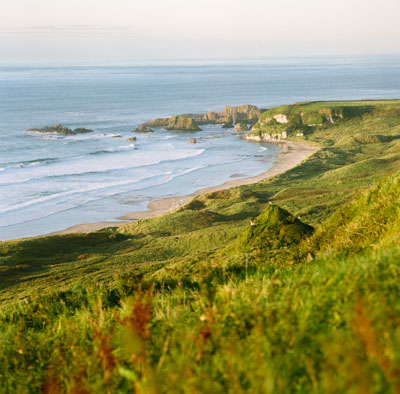
NIKKOR.C 80-200mm f/4.5 at 200mm. Ireland sunset, with Santa Color 100 film.
Most of its life is spent in Aperture Priority, occasionally manually setting shutter and aperture when I know I want to create blur. Or I'll use the meter lock function to get the right shutter speed to meter for an area I know won't be accounted for by the centre weighted matrix metering in the composition. Metering never fails me. I'll err on the side of overexposure when in doubt. The batteries last maybe a year of regular use and spares are easily carried in a camera bag. And the viewfinder? Gloriously bright. I've dropped it, damaging the ISO selector dial and the cover catch, so any ISO changes are made blindly due to the display being stuck — fixable but it doesn't bother me that much when I use a limited variety of film. Changes can be made with the exposure compensation too if needed. The multiple exposure lever lost its screw at some point so that doesn't work, but I haven't yet felt the desire to do multiple exposures. A NIKKOR-S.C 55mm f/1.2 lives on it, being swapped out for an E series 75-150mm f/3.5 when I want more zoom when travelling, or a 70-200mm if I'm local. The serial number 1810888, body stamp 87VM, dates it to August 1987. Ergonomics aren't bad; I'd love a chunky hand grip like the DSLRs of mid-2000s but it's perfectly usable (and packable!) without. I've tied some rope through the strap ring for an impromptu wrist strap that's easily lasted the past 6 years of abuse. I'd guess it's seen 200–300 rolls put through it in my ownership (would be more if film was cheaper! .·°՞(¯□¯)՞°·. ).
How does it travel?
The camera body is fairly small and compact, however the HP viewfinder can make it bigger than it seems. Sometimes it will catch on my camera bag but that's as much because I carry a small bag as it is a bulky viewfinder. I rarely carry it on a shoulder strap as I find naturally the weight and strap attachment points mean the camera back sits against my body, lens pointing outward, instead of what I'd prefer — camera base against my body with the lens hanging downward. A wrist strap is enough, plus it means I'm more likely to get an impromptu photograph compared to bumbling for it at my waist or in a bag.
Lenses
So. many. options. Nearly all Nikon F-mount lenses manufactured between 1959 and the mid-2000s will fit. I currently own:
NIKKOR S.C 55mm f/1.2 (1973)
Micro-NIKKOR-P.C Auto 55mm f/3.5
NIKKOR 35mm f/2
Nikon Series E 75-150mm f/3.5
Sigma Zoom 28-70mm f/2.8
Format
35mm SLR
Shutter
1 — 1/4000s
Mount
Nikon F
Meter
TTL centre-weighted
Flash sync
1/250s
Weight
540g
Dislikes
It doesn't sit as nicely in my hand as other cameras, something that might be solved with an additional grip. Seeing the shutter speed reading in the LCD display in the viewfinder whenever it is dark is near impossible. There's a tiny light you can press to illuminate the screen, but it's fairly dim and hard to press without a fingernail. Although I am impressed the bulb still works after all these years. I'm always getting the Depth Of Field Preview button mixed up with the Exposure Memory Lock button — my fingers think their locations should be swapped.Overall?Unless something monumental changes this will continue to be my go-to for the next 10 years. If it's ever lost or stolen I'll cry and then promptly buy another.
Serial: 1236337 · Medium Format SLR
Zenza Bronica SQ-A Big heavy brute.
Beauty to look through though.
◆
Combine square format and a waist level viewfinder for a whole different photographic experience altogether. Definitely less natural — look down and suddenly there's a little square representation of the world, framed in metal sitting in the palm of your hands. It's joyful. The square feels more constrained yet more intimate at the same time. Less impromptu, more deliberate. After searching for more zoom than a standard TLR, I landed on the Bronica for its availability and modularity. I love that I can swap lenses, film backs, and viewfinders until my heart is content. Honestly it's a game changer when you can carry colour and black & white film, knowing you can use your judgement at the scene. With 12 shots per roll of 120 film, you'll get to crank the film advance lever plenty, which is a great tactile experience in and of itself. I've travelled with this camera to Jordan and to India, and while I don't regret bringing it, I don't feel it suits my style as well as a 35mm SLR. Deliberate can be a good thing, but sometimes an impromptu snap is the one you end up remembering.
Belfast, 2024 · Maybe 50(?) rolls shot
★★★★☆
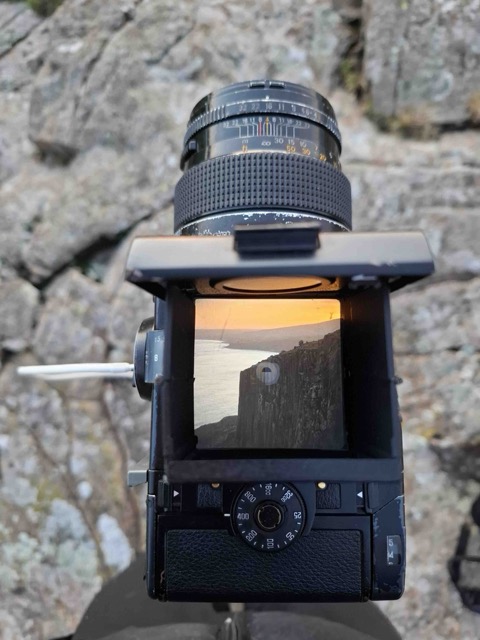
Bronica SQ-A with Zenzanon PS 150mm and waist level viewfinder.
Zenzanon PS 80mm example. Kodak Gold 200.
Zenzanon PS 80mm example. Ilford HP5+.
Zenzanon PS 80mm example. Kodak Gold 200.
How many people to carry it?
Unless I'm committing to a single lens and film back, the Bronica and its accessories go in a cheap camera backpack. It's a little too cumbersome in a messenger bag despite fitting, and it's usually carried with a tripod if I'm taking photos of a landscape, so a dedicated bag suits best. Entirely possible however to throw a shoulder strap on it and carry it around. I actually find it sits nicer on the body than an SLR; the camera base sits against your hip and the lens points towards the ground. Keeps you nice and low profile walking through a crowd.
Lenses & accessories
Alongside 2 film backs, I've got the standard 80mm lens that tends to come included on sales and I think it's brilliant. It'll cover the majority of scenarios and has some lovely photographic qualities. The 150mm lens is for me the most used. With landscapes I almost entirely avoid wide angles, preferring the telephoto range — however the 150mm is sometimes just a little short for the compression I'm trying to achieve. Still produces beautiful results. Noticeably heavier than the 80mm. The most untested but hopeful lens is the recent addition of the Schneider-KREUZNACH Zenzanon-PS VARIOGON f/5.6 140-280mm. Whew, what a mouthful. At 4kg it feels like a solid tube of metal.
Format
6×6cm MF SLR
Shutter
1 — 1/500s (in-lens)
Lens
Zenzanon PS 80mm f/2.8
Film
120 roll (12 exp.)
Weight
1.36kg with lens
My dislikes/gripes
The mirror slap on this is crazy. I've had it sat on medieval stone bridges taking a photograph and still had jitter in the end result because of the mirror slapping. Yes, you can lock up the mirror, but easy to forget. Will be more important at longer focal lengths than wide angle. Might just be my copy, but the dark slide can be tricky to get back into the film back — sometimes feels like it's blocked despite being slotted correctly.
Serial: SX 4080125 · 120 TLR
Yashica 635 TLR Beautifully simple.
A little box with a lens.
◆
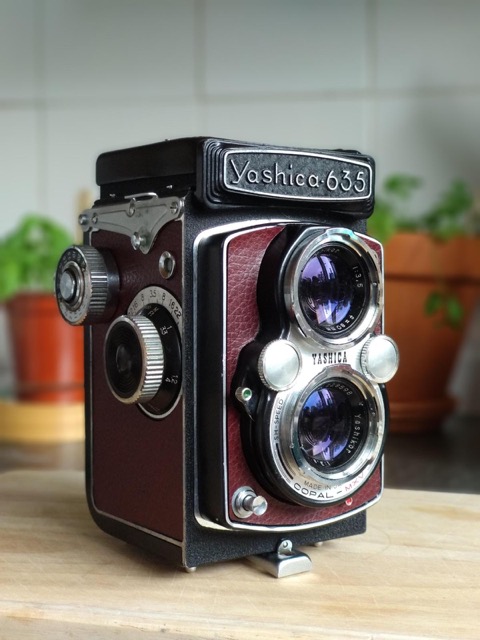
The Yashica 635 was my first step into both square and medium format photography. The basic camera was a cheap entry point and is surprisingly pleasant to use for such a dinky little box. It's by far the camera that gets the most compliments from strangers, and its looks are so disarming that strangers are less likely to be bothered if you point it in their direction. The serial number dates its production to around 1964 — thanks to Paul Sokk at yashicatlr.com — so for a 60-year-old camera I think it's incredible. The ergonomics are one of my favourites: hold it in the palm of your hand and your thumbs naturally rest on both the shutter speed and aperture dial, while your finger falls on the shutter. Someone has put thought into this and it shows. The Copal-MXV leaf shutter is genuinely hard to hear, it's so quiet; so peaceful when you're taking photos on a slow walk. I haven't taken this travelling per se, but its completely mechanical qualities and lightweight would be well suited. After buying I reskinned the leather as it had seen better days, replacing it with a nice burgundy red that I think suits the camera handsomely.
Owned since 2019 · Maybe 20–30 rolls shot
★★★☆☆
Sitting pretty reskinned in red. Yashica 635.
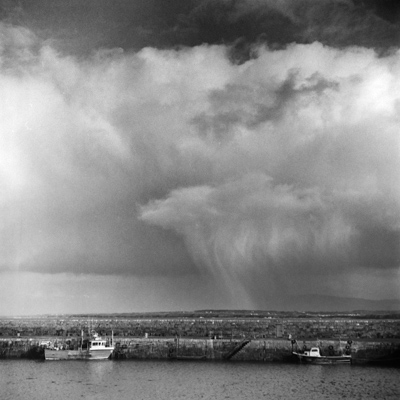
Moody image taken with the Yashica 635 on Ilford HP5+.
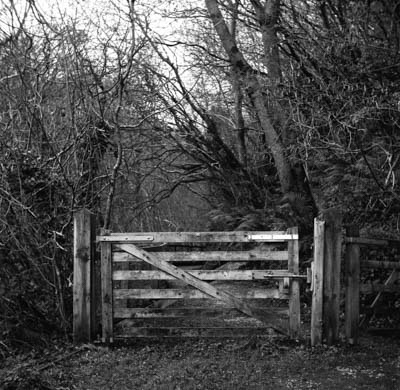
A wooden gate and a tunnel of bare trees. Yashica 635 with Ilford HP5+.
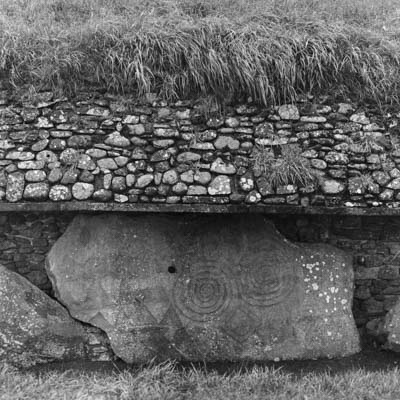
Stone carvings at megalithic site Newgrange. Yashica 635 with Ilford HP5+.
Easy to carry
The rectangular shape of this camera means it hangs nicely over a shoulder, with very little lens to point out and bump anything. The leather carrying case that came with it is a work of art, red velvet lining inside and all. I carry it without it however as the age has deteriorated the stitching and it's falling apart. Maybe a repair for the future.
Lens
The lens is of the time. Compared to modern glass it's definitely softer and will glare and fog when pointed at direct sunlight. I don't consider this bad however — it's still capable of producing pleasing photographs in a way that modern glass can't replicate. There's softness and charm that doesn't look synthetic and I wouldn't change that. Bokeh isn't the best, but definitely not bad.
Conclusions
A very charming little camera. Its limitations are apparent but that doesn't stop it being a delight to use and it can still produce some nice results. With its simplicity I could easily see this being usable in another 60 years, lubricants seen to and maybe a spring refreshed.
Serial: 5836805 · 35mm compact
Olympus XA It's actually pocket sized.
Just don't wear skinny jeans
◆
I bought this from a photographer in Belfast who told me he used it as a backup when he was covering the events in Bosnia in the '90s. He showed me what must have been A3 prints of the photographs he'd taken with it and I was amazed at the contrast between such a large print and such a small camera. I can't remember his name but it might have been Sean McKernan (Sean if you're reading thanks for selling me your camera!) I've used this camera a number of times since then and have mixed feelings about its place in my rotation. It's definitely better with black and white film than colour in my opinion, entirely possible that my findings are isolated to my copy but I find it lacks contrast and can be a little soft given it's a camera that was designed to have a "proper" lens. I'll hold my judgement just yet because I haven't used it in recent years - case is still open. The sliding clamshell cover is definitely tempramental on mine, it the top rail seems to slide easier than the bottom, allowing it to stick from time to time. No biggie except the shutter doesn't fire unless the cover is fully open. On that point however it's great that there is a sturdy cover for the lens given how much it could be rubbing on inside your pocket. I've found the metering to be fairly accurate. There's no meter lock so you'll have to compose accordingly. I don't have any experience with the flash but it is an external unit that clips into the camera; something that seems to defeat the point of the portability, but perhaps an on board flash wasn't possible without comprosmising elsewhere and if so I respect the decision to prioritise the main camera functions. You'll find you feel the shutter as much as you hear it as when you take a photo. It's definitely an audible click and not a clack, and you'll feel the vibration in your finger tips as it spreads through the camera body. Two LR44 batteries for its electronic shutter, if they die there's nothing mechanical to fall back on so carry some spares. The winder is such fun to use bringing big nostalic vidbes from the disposable cameras of the 90s. Smile as you spin it three times to advance to the next frame.
Owned since 2019 · Probably less than 10 rolls shot
★★★☆☆
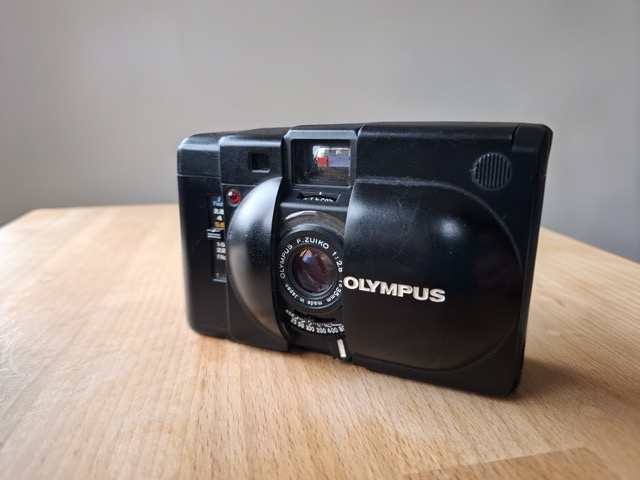
Olympus XA with cover slid open
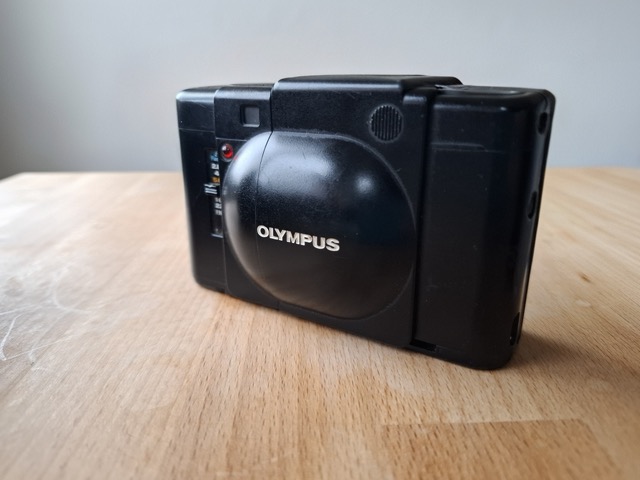
Olympus XA with cover closed
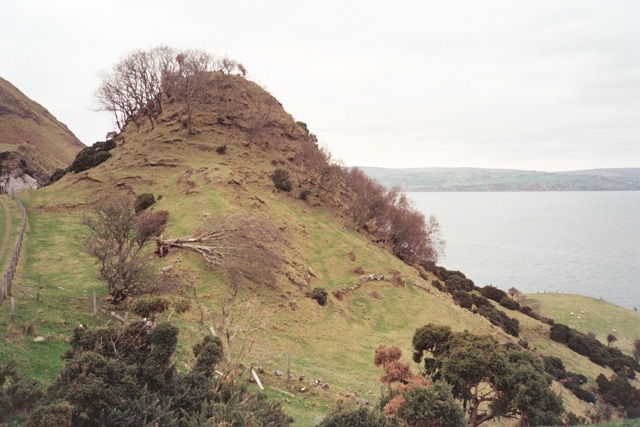
Example photo with Olympus XA - probably Kodak Colorplus
Example photo with Olympus XA - probably Kodak Colorplus
How does it travel?
10/10. Hard to get something smaller for 35mm film. Put it in your jacket, tie it to your mutt, slip it in your trousers, stick it in your buxton messenger bag. It's a camera to bring when for whatever reason you don't want to bring a camera. Being really picky you might find diffiulty finding a wrist strap for it, the strap latch is really narrow!
The f/2.8 Zuiko lens
Like I said above, it may be my copy but I've found the results from this camera to be a little soft and sometimes hazy. It is definitely sharper at larger aperture numbers, but it produces noticeable vignetteing and chromatic aberation in certain conditions. That all sounds a little harsh for such a small compact camera because you can get some perfectly good photographs with this, but it's worth considering if you're buying one at inflated internet prices of today.
Dislikes
The shutter button has zero feel to it, so it might fire prematurely when you rest your finger on it ready to snap. The film release button is impossible to press with anything other than the nail of your little finger - normal sized hands beware! The focusing screen is small and it can be hard to operate in low light conditions, even with added red tape like the internet trick suggests. The ergonomics in general are not what I'd call pleasurable to use and I can only imagine would be impossible to use with gloves.
Serial: 7752909 · 35mm compact
Olympus Mju Less thinking, more snapping.
◆
I much prefer the shutter button on this to the Olympus XA as it has a half press mechanism before clicking the shutter. Don't think that means you're safe from taking an accidental photo as it's still sensitive and easily depressed. It's a joy to hold in your hand with the curved endges not only rounding out to fit nicely in your palm, but to curve into a ridge in the places your fingers will be gripping to hold and to open the cover. Mine doesn't flash and I'm not exactly certain why; perhaps a previous owner opened it up and disabled it. It still makes noises like it's charging the bulb however. The viewfinder is verging on the side of unusable and like some sort of blues harmonica photography device, I'll find my eye repositioning trying to slide left and right to find it. There's a nice little LCD screen at the top that lists how many shots you have taken, the battery level, and the status of the flash. Automatic film rewind when it can't advance anymore is a cool little feature, it's quite a nostalgic sound although just don't finish your last shot in church or there could be an awkwardly long period of time where your camera is grumbling while everyone around you looks for the source. Olympus launched the Mju in 1991 and it was an immediate hit. A clamshell compact with a sliding cover that doubles as the power switch, autofocus, auto flash, DX coding, and a 35mm f/3.5 Zuiko lens — all in a body that genuinely fits in a jeans pocket. The later Mju-II (1997) improved the lens to f/2.8 and added weather sealing. The Mju sits at the opposite end of the philosophy spectrum from the F3: no decisions required, no manual anything. Slide the cover, point it at something, press the button. The automation is good enough that the results are consistently better than they have any right to be for the amount of effort involved.
★★★★☆
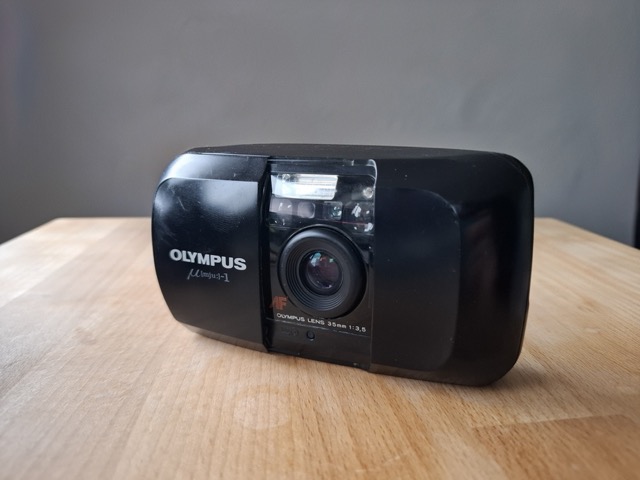
Olympus Mju
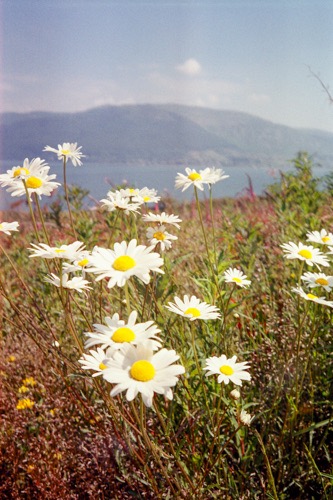
Daisies taken with Olympus Mju — Probably Kodak Colorplus
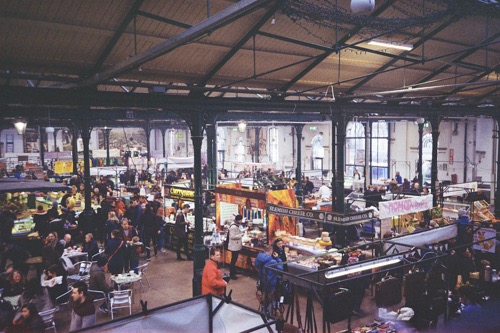
Indoor market with Olympus Mju — Probably Kodak Colorplus
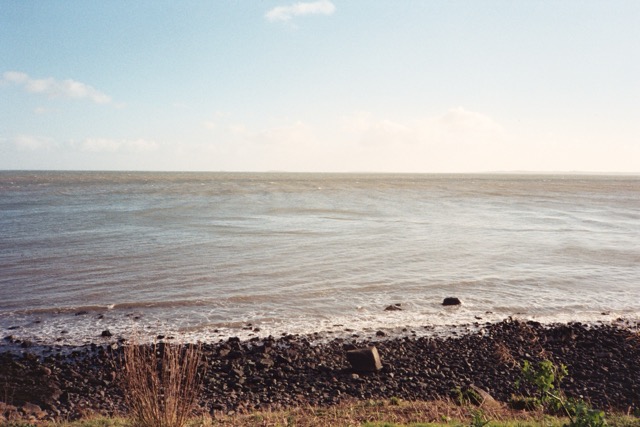
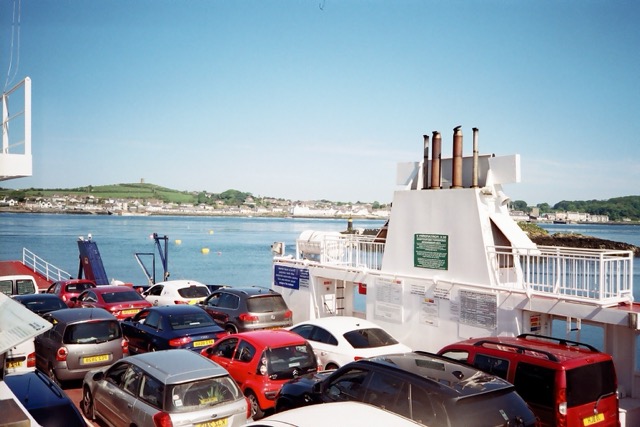
Ferry crossing photograph with Olympus Mju — Possibly Kodak Colorplus
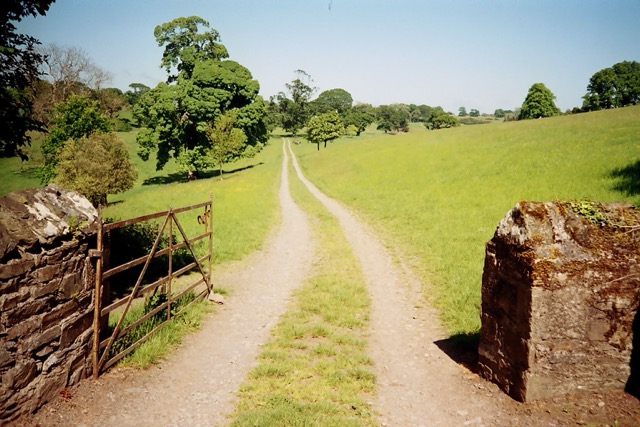
Sunny walk in the park - Probably Kodak Colorplus
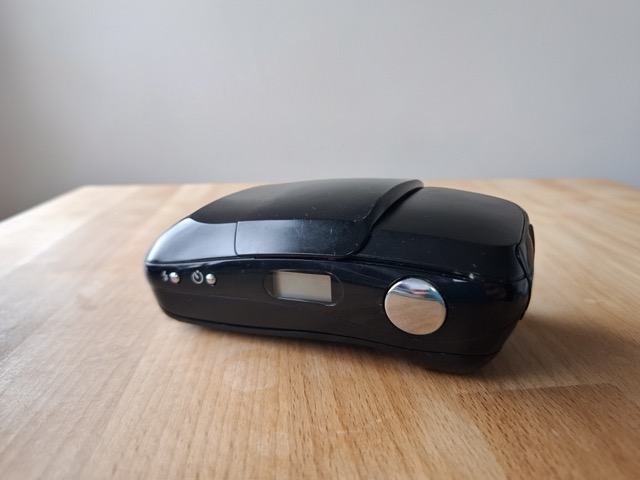
Olympus Mju — cover closed.
How and where does it travel?
Released at a time baggy jeans were in style it wouldn't be hard to call a lot of cameras pocket sized, but the Mju can hold this title even today. It's possible slightly less pocket sized compared to the Olympus XA due to the added curves but still absolutely possible to slip in in a trouser pocket. Jacket pockets of course are perfect and it would fit into any handbag or backpack. Holidays, days out with friends, family dinner, nights out - bring it when you don't want to look like a TV crew. Point, click, boom. Back to the conversation.
It has a lens?
The lens and ease of use are probably the main reason this camera has shot up in internet prices in recent years. Beginner friendly and suitable for so many occasions, paired with a great lens and tiny form factor? Recipe for success. The Zuiko f/3.5 on my early model is what I would call perfectly good. Later models got an f/2.8 update for lower light. It definitely has a bit of a 90s look to the images - there is a softness and vignette in the corners and the autofocus will probably miss at least a handful of times each roll. Flaws? Perhaps. There's no doubt it stands out with a charm rarely seen in the pixel perfect world of cameras.
Format
35mm compact
Lens
Zuiko 35mm f/3.5
Focus
Autofocus
Flash
Built-in auto
Film
DX coded ISO 50–3200
Dislikes
Full auto is the selling point, but autofocus can miss and you have no control over that. The flash is supposed to fire automatically but my copy seems to be broken in this department as it doesn't fire at all. The lens can be a little lacking for indoor shots (especially without flash) but it's not the end of the world. The viewfinder is too small in my opinion, especially if you're using your left eye, as your nose will rub against the extruded curve of the back of the camera. Again not the end of the world. Fully reliant on electronics, it's likely that when something breaks on this it's not going to be easy or economical to repair.